
I was talking with some friends a few months back about a book, which is The Power of Habit from Charles Duhigg. I remember reading this book when I was in my second year in college. There were some points that I could recall, but right there in that conversation, it seems like I haven’t read the book at all. Then I realized that doesn’t matter the number of books or articles you read, but the amount of those content that you keep over time.
I decided that moment that I needed a better system to remember stuff. I did some research more on this problem and I have created a good system that works to keep things over time. Is not perfect, but it does a good job for now.
System for learning and retention
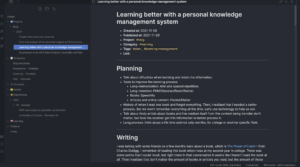
Personal Knowledge Management (PKM)
This system is used for leaving everything that you learned in a summary, keeping main concepts and quotes stored, so you can revisit and use this knowledge whenever you need to.
The PKM is ideal also to make connections, link one article to another, join concepts, ideas, and so forth. This is helpful to build more creativity, by producing new connections over time.
A few examples of great tools that fill in this process:
- Obsidian, which is the tool that I use today.
- Roam Research.
- Notion.
It doesn’t matter really what you pick, just keep in mind that the perfect tool doesn’t exist. Test a couple of them and see which one adjusts to your objective. Over time, things will improve while you use more the platform.
Long-term Memorization
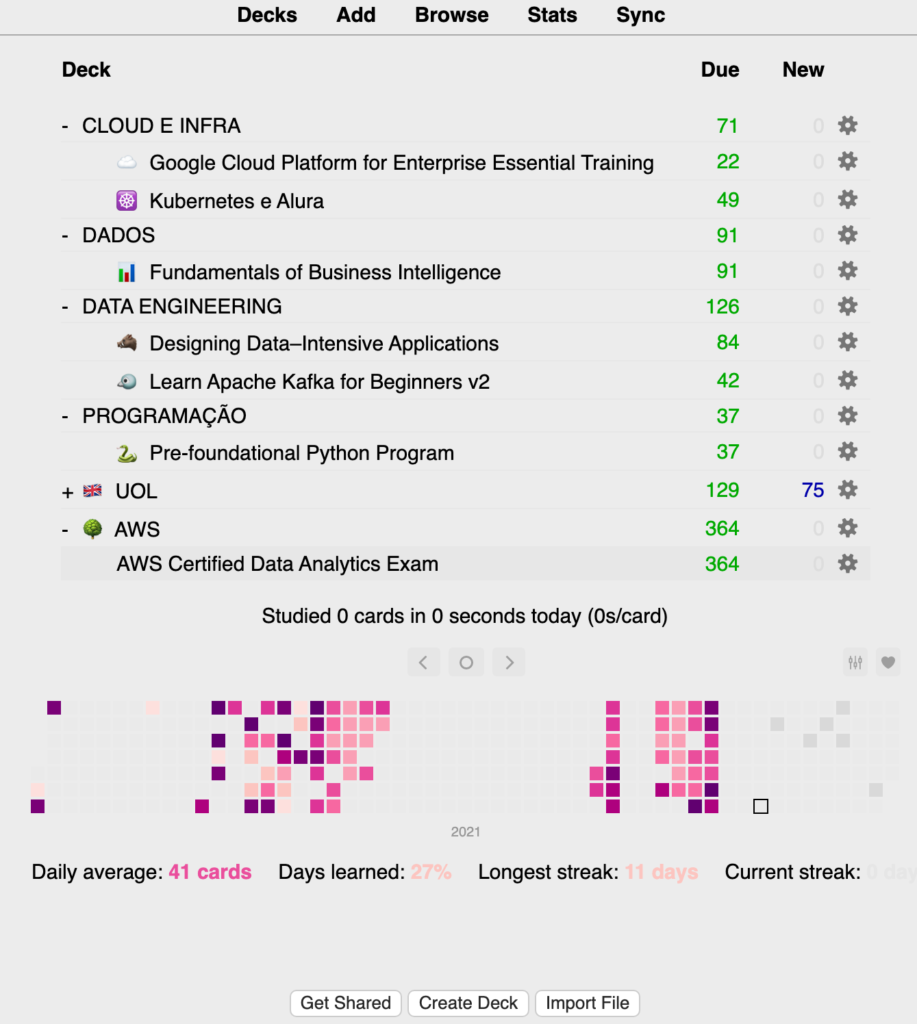
For remembering stuff more, I use the concept of Active Recall and Spaced Repetation. The problem with that type of tool is that takes too much time to step it up and do the actual recall process. This is why I only use specific elements like remembering content for certification or things that are essential for me.
The tools that I used to build the flashcards with the concepts and ideas while recalling the information on a specific frequency:
Knowledge acquisition
One of the best methods for me to keep learning new information is books and articles. The tools I used in this process:
- For books: Speechify to read through the books and make some marks. The app reads the text and allows to speed up the reading voice, this way is possible to finish the book faster and keep the attention in better.
- For blog posts and online content: I store the articles in Matter. There is also Pocket, which I used for several years, but Matter has a better UI and can read through the newsletters that I receive from emails.
To receive news and articles, I like to follow the current links and platforms:
Producing something with the knowledge
I believe that one great way to retain knowledge is to do something with the things you already learned. Could be to produce a lecture, a video, a project. In this case, I decided to build this blog.
The tools I use are:
Considerations
As mentioned before, the system that I have built and used had been improved over time. Some elements work better than others, especially for achieving specific results. Only by testing and having the flexibility to prove to change the process is worth it. This is why I enjoy it so much Obsidian because is just markdown files that can be imported in any other tool if I feel like testing in another platform.
If you plan to use one of those tools, remember the final objective is to learn and retain better over time. A final quote that is perfect for this article:
“We become what we behold. We shape our tools, and thereafter our tools shape us.” – John Culkin (1967).